Is CBD Legal in Tennessee?

Yes, CBD is legal in Tennessee when derived from hemp containing less than 0.3% delta-9 THC. However, the state’s regulatory framework is undergoing significant changes, with new licensing requirements already in effect and major restructuring planned for 2026 that will impact how and where you can purchase CBD products.
Tennessee CBD Legality: The Current Status
Tennessee follows federal guidelines established by the 2018 Farm Bill, which legalized hemp-derived cannabinoid products nationwide. The state distinguishes clearly between legal hemp products and illegal marijuana based on THC concentration.
Hemp-derived CBD products remain legal in Tennessee provided they contain no more than 0.3% delta-9 THC on a dry weight basis. This federal threshold applies to all finished products, not just the original plant material. Any cannabis product exceeding this limit is classified as marijuana and remains illegal for recreational use in Tennessee.
The Tennessee Bureau of Investigation uses a three-step testing protocol to differentiate between hemp and marijuana. Products that pass these tests and meet labeling requirements can be legally sold and possessed throughout the state.
Key Legal Requirements for CBD in Tennessee
THC Limits and Testing Standards
All legal CBD products in Tennessee must contain less than 0.3% delta-9 THC by dry weight. Manufacturers and retailers are required to ensure proper testing, though current enforcement of testing standards is temporarily suspended due to ongoing court injunctions.
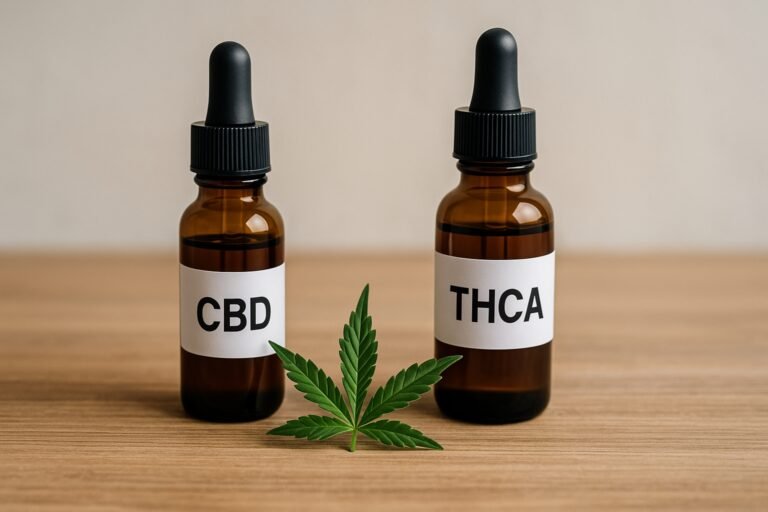
The state has implemented controversy around THCA testing. THCA (tetrahydrocannabinolic acid) is a non-psychoactive compound that converts to THC when heated. New regulations would combine THCA and THC levels for testing purposes, potentially making many currently legal products illegal.
Age Restrictions
Tennessee enforces strict age requirements for CBD products. Most hemp-derived cannabinoid products require purchasers to be 21 years or older. Selling CBD to anyone under 21 is classified as a Class A misdemeanor, carrying the same penalties as selling alcohol to minors.
Retailers must verify age before any CBD sale, and businesses that allow patrons under 21 must store CBD products behind the retail counter where they’re inaccessible to younger customers.
Product Storage and Display Rules
CBD products cannot be displayed openly if the establishment serves customers under 21. Products must be stored behind physical barriers or counters, with clear signage warning that hemp-derived cannabinoid products may have intoxicating effects and cause impairment.
Self-checkout purchases and vending machine sales of CBD products are prohibited statewide. All transactions must occur through face-to-face sales with proper age verification.
Recent Changes to Tennessee CBD Laws
The 2023 Hemp-Derived Cannabinoid Act
Tennessee enacted comprehensive CBD regulation through the Hemp-Derived Cannabinoid Act in 2023, establishing the first formal regulatory structure for the industry. This legislation created licensing requirements, taxation systems, and product standards that are being implemented in phases.
The law introduced the term Hemp-Derived Cannabinoid Products (HDCPs) as Tennessee’s official designation for legal CBD and related products.
Licensing Requirements
Since July 1, 2024, all businesses selling CBD in Tennessee must obtain proper licensing from the Tennessee Department of Agriculture. This includes:
- Supplier licenses for manufacturers and distributors
- Retailer licenses for stores selling directly to consumers
- Producer licenses for hemp cultivation
Applications require background checks, fingerprinting through the Tennessee Bureau of Investigation, and proof of business registration. Businesses located within 1,000 feet of schools or churches face additional restrictions, though some grandfathering provisions apply.
New Tax Structure
Tennessee implemented a 6% excise tax on CBD retail sales beginning July 2023, collected in addition to regular sales tax. Retailers must file monthly returns and remit taxes by the 20th of each month.
This retail tax structure will change in 2026, shifting to a wholesale tax system similar to alcohol regulation.
What’s Changing in 2026
Transfer to Alcoholic Beverage Commission
Starting January 1, 2026, regulatory oversight transfers from the Tennessee Department of Agriculture to the Tennessee Alcoholic Beverage Commission (ABC). This move signals Tennessee’s intent to regulate CBD products similarly to alcoholic beverages.
The ABC will establish new licensing categories, including distinct wholesaler licenses for businesses distributing packaged CBD products for resale.
New Product Restrictions
The 2026 regulations will ban several product categories currently available:
- THCA products that could convert to THC levels above 0.3% when heated
- Synthetic cannabinoids including artificially created compounds
- THC-P products and other newer cannabinoid variants
These restrictions aim to close perceived loopholes in federal hemp definitions.
Sales Channel Limitations
Major changes to CBD sales channels take effect in 2026:
- No online sales or direct-to-consumer shipping allowed
- No convenience store sales in most cases
- Sales restricted to licensed establishments or businesses limiting entry to adults 21 and older
- Bars and restaurants with alcohol licenses can sell CBD for on-site consumption
Purchasing and Possessing CBD in Tennessee
Where You Can Buy CBD
Currently, CBD products are available at licensed dispensaries, specialty hemp stores, and some retail locations throughout Tennessee. Many convenience stores and gas stations still sell CBD products, though this will change under 2026 regulations.
Always verify that retailers have proper Tennessee licensing and that products display appropriate lab testing information and THC content labels.
What Products Are Legal
Legal CBD products in Tennessee include:
- CBD oils and tinctures with proper labeling
- CBD edibles meeting dosage and packaging requirements
- Topical CBD creams and lotions
- Smokable hemp flower in sealed containers
- CBD vape products under 0.3% THC
All products must be child-resistant and properly labeled with cannabinoid content, manufacturer information, and batch numbers.
Quantity Limits and Possession Rules
Tennessee places no quantity limits on CBD possession for personal use, provided products remain under the 0.3% THC threshold. However, possessing large quantities without proper documentation could raise distribution concerns.
Products must remain in original packaging with lab testing labels intact to demonstrate legal status if questioned by law enforcement.
Legal Risks and Enforcement
Mislabeled Products and THC Content
The primary legal risk for CBD consumers involves mislabeled products that actually contain THC levels exceeding 0.3%. Since CBD products are not regulated as strictly as pharmaceuticals, testing discrepancies occur regularly.
Products exceeding THC limits can result in marijuana possession charges, even if purchased legally with compliant labeling. Choose reputable manufacturers that provide detailed third-party lab results for every batch.
Unlicensed Retailers
Purchasing from unlicensed retailers creates legal uncertainty about product legitimacy. While consumers typically face no penalties for buying from unlicensed sellers, the products themselves may not meet legal standards.
DUI and Impairment Concerns
Tennessee’s DUI laws prohibit driving under the influence of any intoxicating substance. Even legal CBD products could potentially result in impairment charges if they affect your ability to drive safely.
CBD products containing any THC can result in positive drug tests, potentially creating issues for employment or legal proceedings.
Tennessee’s Limited Medical CBD Program
Tennessee maintains a separate, highly restrictive program allowing CBD oil with up to 0.9% THC for specific medical conditions. This program requires:
- Diagnosis of intractable seizures or epilepsy by a Tennessee physician
- Legal recommendation from an out-of-state medical provider
- Proper documentation and registration
This medical program operates independently from general hemp-derived CBD regulations and serves a very limited patient population.