Does CBD Cause Headaches? Understanding the Facts and Risks

Headaches after taking CBD are uncommon, but some users do report this experience. Understanding why this might happen and how to prevent it helps you make informed decisions about incorporating CBD into your wellness routine. The good news is that most people use CBD without any headache issues, and when they do occur, there are usually clear explanations and solutions.
The Scientific Reality About CBD and Headaches
Current research shows no definitive evidence that CBD directly causes headaches. Clinical studies examining CBD’s side effects typically list drowsiness, dry mouth, and changes in appetite as the most common reactions, but headaches rarely appear in these findings.
This doesn’t mean the reports are invalid. When someone experiences a headache after taking CBD, it’s often a case of correlation rather than direct causation. Your body’s endocannabinoid system processes CBD in complex ways, and individual responses can vary significantly based on factors like metabolism, overall health, and product quality.
The research that does exist suggests that CBD might actually help with certain types of headaches through its interaction with pain pathways, making direct causation even less likely.
Why Some People Might Experience Headaches
Product Quality Issues
Poor quality CBD products represent the most common culprit behind CBD-related headaches. The unregulated nature of the CBD market means significant variations in product purity and potency.
Contaminants from substandard extraction methods can trigger headaches in sensitive individuals. Some manufacturers use solvent residues like butane or ethanol that, when not properly removed, may cause adverse reactions. Pesticides and heavy metals from poorly grown hemp can also contribute to unwanted effects.
Many products contain incorrect CBD concentrations compared to their labels. Taking more CBD than intended, or getting inconsistent doses, can lead to side effects including headaches. Products without third-party testing offer no guarantee of purity or accuracy.
Quality manufacturers use CO2 extraction methods and provide detailed lab reports showing exactly what’s in their products. These certificates of analysis should be readily available and recent.
Dosage-Related Factors
Individual tolerance to CBD varies dramatically between people. What works perfectly for one person might be too much for another, leading to unwanted effects.
Starting with too high a dose is a common mistake. CBD has cumulative effects, meaning it builds up in your system over several days of use. Taking large amounts initially can overwhelm your body’s processing capacity.
Your body weight, metabolism speed, and general health status all influence how you process CBD. Someone with a faster metabolism might clear CBD quickly, while others retain it longer. Taking CBD on an empty stomach versus with food also affects absorption rates.
The key is finding your personal sweet spot through careful, gradual adjustment.
Secondary Factors
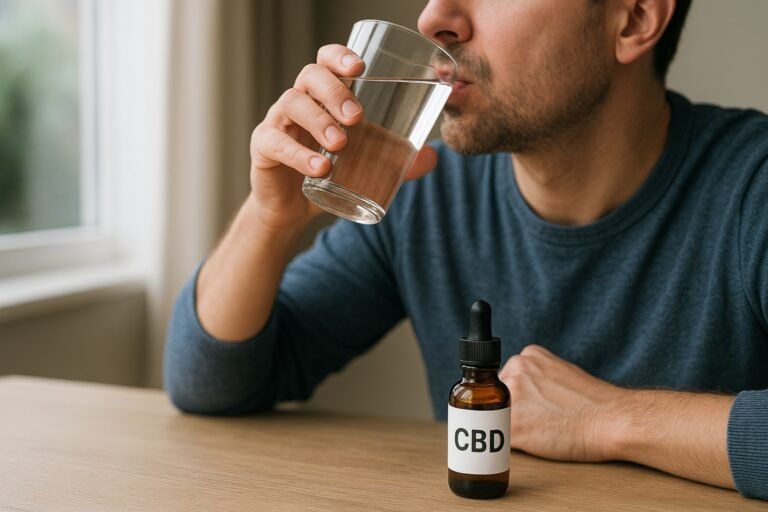
Dehydration causes more headaches than most people realize, and CBD users sometimes forget to maintain proper fluid intake. CBD can have mild diuretic effects in some people, making hydration even more important.
Drug interactions represent another consideration. CBD affects how your liver processes certain medications, potentially altering their effectiveness or increasing side effects. Blood thinners, seizure medications, and some heart medications show known interactions with CBD.
The timing of your CBD consumption matters too. Taking CBD close to bedtime when you’re already tired, or during stressful periods, might contribute to headache development.
Some individuals simply have heightened sensitivity to new substances, experiencing temporary adjustment symptoms as their body adapts to CBD.
What to Do If You Experience a CBD Headache
Immediate Steps
Stop using CBD temporarily and assess the situation. This isn’t necessarily permanent, but taking a break helps you understand whether CBD is the actual cause.
Hydrate properly by drinking water throughout the day. Dehydration headaches often resolve within hours of adequate fluid intake. Avoid excessive caffeine or alcohol while dealing with the headache.
Monitor your symptoms carefully. Note when the headache started, its severity, and how long it lasts. Document what CBD product you used, the dose, and timing of consumption.
Keep a simple log of your CBD use and any side effects. Patterns often emerge that help identify the real cause.
Prevention Strategies
The “start low, go slow” approach prevents most CBD-related issues. Begin with 5-10 mg of CBD and wait several days before increasing. Your body needs time to adjust to new substances.
Choose quality products from reputable manufacturers who provide detailed lab reports. Look for companies that test every batch and make results easily accessible on their websites.
Maintain proper hydration habits regardless of CBD use. Most adults need 8-10 glasses of water daily, more if you’re active or live in a hot climate.
Consult healthcare providers before starting CBD, especially if you take medications or have health conditions. They can advise you about potential interactions and appropriate dosing.
Choosing Quality CBD Products
CO2 extraction represents the gold standard for CBD production. This method uses pressurized carbon dioxide to extract CBD without leaving harmful chemical residues. Products made with CO2 extraction typically have cleaner safety profiles.
Third-party lab reports should show testing for potency, pesticides, heavy metals, and residual solvents. These reports should be recent (within the last year) and match the specific batch of product you’re purchasing.
Reputable manufacturers provide clear information about hemp sourcing, extraction methods, and testing procedures. They’re transparent about their processes and responsive to customer questions.
Consider whether you want full-spectrum CBD (containing other hemp compounds) or CBD isolate (pure CBD only). Full-spectrum products may provide enhanced benefits through the “entourage effect,” but they also contain trace amounts of other cannabinoids that could affect sensitive individuals differently.
When to Consult a Healthcare Professional
Persistent headaches that continue after stopping CBD warrant medical attention. While CBD-related headaches are typically mild and temporary, ongoing pain could indicate other issues.
Severe symptoms like intense headaches, nausea, dizziness, or vision changes require immediate medical evaluation. These symptoms are unlikely to be CBD-related but need professional assessment.
If you take medications, discuss potential interactions with your doctor before trying CBD. They can review your medication list and advise whether CBD is appropriate for your situation.
People with pre-existing medical conditions, especially liver problems, seizure disorders, or heart conditions, should involve their healthcare team in CBD decisions. While CBD is generally well-tolerated, individual medical circumstances can affect how you respond to any new supplement.
Remember that healthcare providers can offer personalized guidance based on your complete health picture, something no general article can provide.