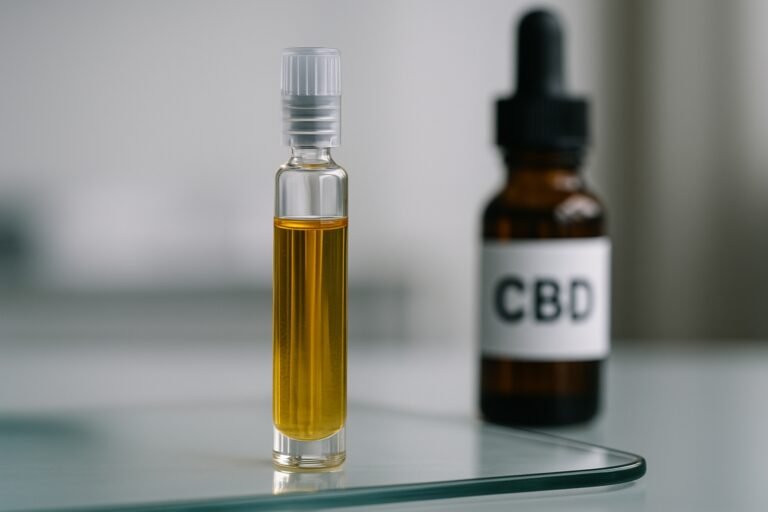
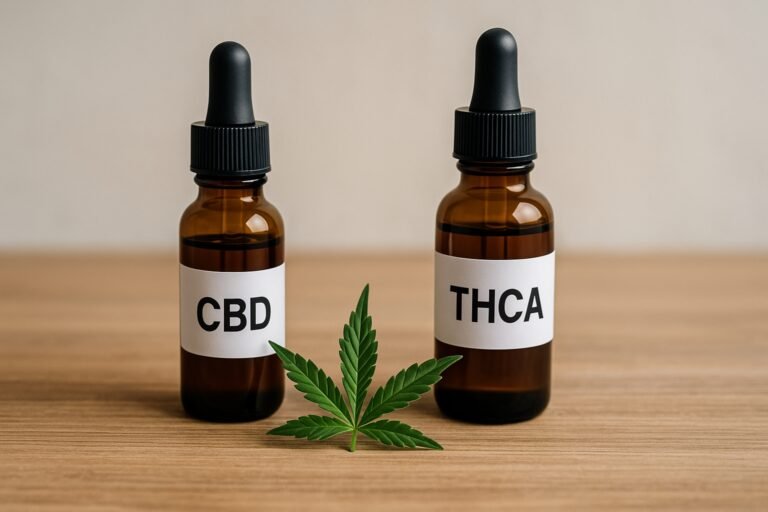
Can Truck Drivers Smoke CBD?

The question keeps many truck drivers awake: can you smoke CBD without risking your CDL? While CBD products are legal under federal law, the reality for commercial drivers is far more complex. DOT regulations don’t distinguish between THC from marijuana and THC from CBD, creating a career-threatening risk that most drivers don’t fully understand.
The DOT’s Official Position on CBD Use for Truck Drivers
The Department of Transportation has made its stance crystal clear in official guidance updated through 2024. Safety-sensitive employees, including truck drivers, face strict limitations that go beyond what many realize.
Under 49 CFR Part 40, the DOT prohibits the use of all Schedule I drugs, including marijuana, for any reason. This regulation doesn’t carve out exceptions for medical marijuana prescriptions or CBD use. Even more importantly, Medical Review Officers cannot verify a drug test as negative based on claims of CBD-only use.
The numbers tell the story. According to the Drug and Alcohol Clearinghouse, marijuana accounts for nearly half of all positive drug tests reported since 2020. As of 2024, approximately 177,000 CDL holders remain in prohibited status due to unresolved drug and alcohol violations.
Recent regulatory updates have tightened enforcement further. Starting November 2024, drivers with prohibited status in the Clearinghouse automatically lose their commercial driving privileges. The DOT also expanded testing options in December 2024 to include oral fluid testing alongside traditional urine tests, making detection more flexible for employers.
Why CBD Products Pose Real Risks to Your CDL
The THC Problem in “THC-Free” Products
Here’s where things get dangerous for drivers. Hemp-derived CBD products legally contain up to 0.3% THC. While this sounds minimal, it creates two major problems.
First, THC accumulation happens with regular use. Even products labeled as “THC-free” often contain trace amounts that can build up in your system over time. The FDA doesn’t regulate CBD labeling, meaning companies can make claims about THC content without verification.
Real drivers have learned this the hard way. An Illinois truck driver recently filed a class-action lawsuit after testing positive for marijuana following consumption of CBD edibles labeled as containing “no THC.” This driver had maintained a clean record for 10 years before this incident ended his career.
How Drug Testing Actually Works
DOT drug tests use specific cutoff levels: 50 ng/mL for initial screening and 15 ng/mL for confirmation. These thresholds are sensitive enough to detect the trace amounts of THC found in legal CBD products, especially with regular use.
Full-spectrum CBD products present the highest risk because they contain the complete range of cannabis compounds, including various forms of THC. Even broad-spectrum products, which claim to remove THC, can still contain undetectable amounts that accumulate over time.
The new oral fluid testing approved in 2024 can detect recent use more accurately than urine tests, potentially catching THC from CBD use that might have previously gone undetected.
State Laws vs. Federal Regulations: What Matters for Truckers
This creates massive confusion for drivers. Your home state might fully legalize both marijuana and CBD, but as a commercial driver in interstate commerce, you fall under federal jurisdiction exclusively.
The Federal Motor Carrier Safety Administration (FMCSA) enforces these regulations regardless of state laws. A driver legally using CBD in Colorado faces the same federal consequences as one using it in Texas. Your commercial driver’s license is a federal privilege governed by federal rules.
Even drivers operating entirely within states that have legalized marijuana still face federal consequences. The interstate commerce clause gives federal regulators authority over commercial transportation, creating no safe harbor in any state.
Real Consequences: What Happens When You Test Positive
The consequences extend far beyond losing a single job. A positive drug test triggers a cascade of career-damaging events that can take years to resolve.
Immediate CDL suspension happens first. You cannot operate any commercial motor vehicle until completing the full return-to-duty process. This process requires evaluation by a Substance Abuse Professional (SAP), completion of recommended treatment or education, a negative return-to-duty test, and ongoing follow-up testing.
The Drug and Alcohol Clearinghouse makes this information accessible to all current and future employers. Unlike older systems, this database updates in real-time and follows drivers throughout their careers. Recent statistics show that 70% of drivers entered into the Clearinghouse since January 2024 remain in prohibited status, with only 7% successfully completing the SAP process and finding new employment.
Financial costs compound the problem. SAP evaluations typically cost $400-800, treatment programs can run thousands of dollars, and the return-to-duty process often takes 6-12 months during which you cannot work as a commercial driver.
Safer Alternatives for Truck Driver Wellness
Legal Pain Management Options
Non-steroidal anti-inflammatory drugs (NSAIDs) like ibuprofen and naproxen effectively manage the back pain and joint inflammation common in trucking. These medications work best when used consistently rather than waiting for severe pain to develop.
Topical pain relievers containing menthol, camphor, or capsaicin provide localized relief without systemic effects that could impair driving. These products don’t enter your bloodstream in significant amounts and won’t show up on drug tests.
Physical therapy exercises designed for drivers can address root causes rather than just symptoms. Simple stretching routines performed during mandatory rest periods help prevent the muscle tension that leads to chronic pain.
Stress Management Without CBD
Deep breathing techniques and progressive muscle relaxation provide immediate stress relief during challenging driving conditions. These methods work quickly and improve with practice, giving drivers tools they can use anywhere.
Many trucking companies now offer employee assistance programs that include mental health support specifically designed for drivers. These confidential services help with stress management, family relationship issues, and the unique psychological challenges of long-haul driving.
Sleep hygiene practices often eliminate the need for relaxation aids entirely. Consistent sleep schedules, comfortable sleeping environments, and limiting screen time before rest periods naturally improve sleep quality and reduce stress.
If You Choose to Use CBD: Risk Mitigation (Not Risk Elimination)
Some drivers will use CBD products despite the risks. While this article cannot recommend this choice, understanding risk mitigation helps drivers make informed decisions.
Third-party lab testing provides the most reliable information about THC content. Products with Certificates of Analysis (COA) from independent laboratories offer more transparency than manufacturer claims alone. However, even these tests represent only the specific batch tested, not every product from that company.
CBD isolate products contain only pure CBD without other cannabis compounds. These products theoretically present lower risk than full-spectrum options, but manufacturing processes can still introduce trace THC contamination.
Timing considerations matter for testing windows. THC can remain detectable in urine for 3-30 days depending on frequency of use, body composition, and metabolism. However, random testing makes timing strategies unreliable for career protection.
Legal consultation becomes essential for drivers facing positive test results. Transportation attorneys specializing in DOT regulations can sometimes identify procedural errors or help navigate the return-to-duty process more effectively.
The Bottom Line: Protecting Your Career
The math is straightforward but harsh. CBD products offer potential benefits for pain and stress management, but they create real risks of CDL suspension, career disruption, and financial hardship that can last years.
DOT regulations make no distinction between THC from marijuana and THC from legal CBD products. Medical Review Officers cannot accept CBD use as a legitimate explanation for positive marijuana tests. Recent regulatory changes have made enforcement stricter, not more lenient.
For most drivers, the risk-benefit calculation doesn’t favor CBD use. The trucking industry offers decent wages and job security for drivers who maintain clean records. A single positive drug test can eliminate years of career building and force drivers into lower-paying work while completing the lengthy return-to-duty process.
Alternative pain management and stress reduction methods provide similar benefits without risking your livelihood. While these approaches may require more effort initially, they offer sustainable solutions that enhance rather than threaten your driving career.
The choice remains yours, but make it with full understanding of both the benefits you seek and the consequences you risk. Your commercial driver’s license represents significant investment in training, experience, and earning potential. Protect it accordingly.