How Much CBD Should a Beginner Start With: A Practical Safety Guide

Starting your CBD journey often comes with one pressing question: what dose will provide benefits without unwanted effects? The answer isn’t one-size-fits-all, as every person’s body responds differently to cannabidiol. This guide walks you through finding your optimal dosage safely and effectively, based on current research and expert recommendations.
Why Starting Low Matters More Than You Think
The golden rule of CBD dosing is “start low, go slow,” and there are compelling reasons behind this approach. Your body’s endocannabinoid system needs time to adjust to external cannabinoids. Jumping into high doses can trigger unnecessary side effects like drowsiness, digestive upset, or feeling “off” for hours.
Think of it like introducing any new supplement to your routine. Your metabolism, liver enzymes, and individual body chemistry all play roles in how you process CBD. Starting with a conservative dose gives you a baseline to understand how your body responds before making adjustments.
Most importantly, CBD effects are not linear. Taking twice the dose doesn’t necessarily mean twice the benefit. Many users find their sweet spot at surprisingly low doses, saving money while achieving their wellness goals.
The Universal Starting Point: 5-10mg Daily
Research consistently points to 5-10 milligrams as the ideal starting dose for CBD beginners. This range appears across clinical studies, expert recommendations, and real-world user experiences. For instance, the Arthritis Foundation recommends starting slow with just a few milligrams of a sublingual form of CBD twice a day, while most experts recommend beginning with 5–10 mg of CBD per day.
This conservative approach serves multiple purposes. First, it minimizes the risk of side effects while you gauge your sensitivity. Second, it allows you to establish a clear baseline for comparison as you adjust your dose. Third, it helps you avoid the common mistake of taking too much too soon and experiencing unwanted effects.
Plan to maintain this starting dose for at least one week before making any changes. The general rule of thumb is to take a low dose for about a week before increasing it. This waiting period is crucial because CBD can have cumulative effects, and what seems ineffective on day one might show benefits by day five.
Calculating Your Personal Starting Dose
While 5-10mg works for many people, your body weight can help refine this estimate. A general rule is to start with 1-2 mg of CBD per 10 pounds of body weight. This means:
- 120-pound person: 12-24mg daily starting dose
- 150-pound person: 15-30mg daily starting dose
- 180-pound person: 18-36mg daily starting dose
However, don’t get too caught up in precise calculations. It’s common for two people with identical weights to respond very differently to the same dose of CBD. Your individual biochemistry, metabolism, and even your endocannabinoid system’s unique characteristics matter more than weight alone.
If the calculated dose seems high for a beginner, err on the side of caution and start with 5-10mg regardless of weight. You can always increase later, but you can’t undo taking too much.
Factors That Shape Your Ideal Dosage
Your Body’s Unique Profile
Metabolism speed significantly impacts how quickly your body processes CBD. People with faster metabolisms may process CBD more quickly, potentially needing higher or more frequent doses. If you generally metabolize medications or caffeine quickly, you might need slightly higher doses or more frequent dosing.
Age also plays a role, with older adults typically requiring lower doses due to changes in metabolism and increased sensitivity to substances. Extra safety is advised for seniors when calculating CBD doses, and some experts advise starting with an extremely low dose, such as 2.5 mg.
Your Wellness Goals
The condition you’re addressing directly influences dosing needs. Your reason could impact how much you should take and how you should take it. Here’s what research suggests:
For stress and mild anxiety: Lower doses (5-15mg) often prove effective, as CBD’s anti-anxiety effects don’t always require high amounts.
For sleep support: Moderate doses (15-25mg) taken 30-60 minutes before bed typically work well.
For discomfort and inflammation: Higher doses (20-40mg) may be necessary, as these conditions often require more substantial intervention.
For general wellness: Many users find 5-15mg daily provides the subtle support they seek.
Understanding Delivery Methods and Their Impact
Sublingual Oils: The Gold Standard for Beginners
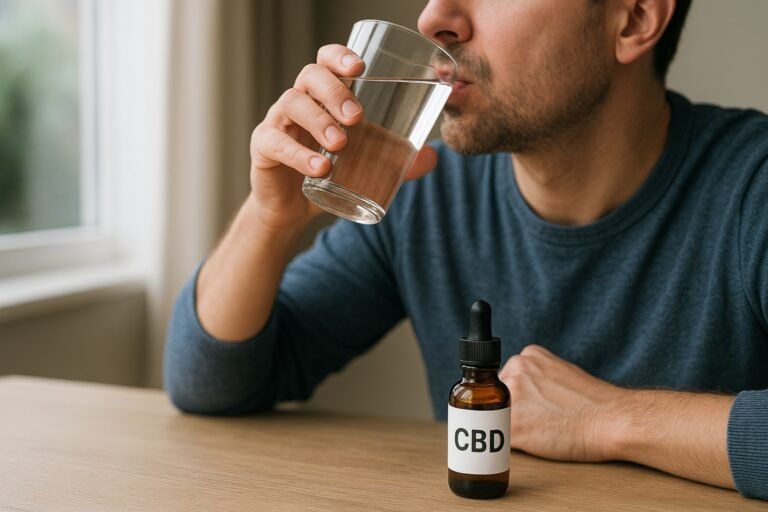
Sublingual administration (under the tongue) offers the best balance of effectiveness and control for beginners. CBD drops or sprays are most effective if you hold the product beneath your tongue. Research suggests that CBD has a bioavailability of between 1 and 19% when absorbed through drops and spray, though it can be as high as 35%.
The technique matters: You have to hold it for around 30 to 50 seconds, or at least 40 seconds, for optimal effects. This allows absorption through the tiny blood vessels under your tongue, bypassing digestion for faster onset and better absorption.
Onset time: 15-45 minutes
Duration: 4-6 hours
Bioavailability: 15-35%
Edibles and Capsules: Convenient but Less Efficient
CBD gummies, capsules, and other edibles offer convenience and precise dosing but come with trade-offs. The oral bioavailability in CBD gummies, CBD pills, CBD capsules, and other edibles has the lowest average absorption rates from 13–19% in humans.
This lower absorption means you’ll need higher doses of edibles to achieve the same effects as sublingual oils. If 10mg of sublingual oil works for you, you might need 15-25mg in gummy form.
Onset time: 30-120 minutes
Duration: 4-8 hours
Bioavailability: 6-20%
Topical Applications: Targeted Relief
CBD creams, balms, and lotions work differently from oral methods. Traditional CBD creams, balms, and muscle rubs typically offer a low CBD bioavailability, lingering around 5%. However, they provide targeted relief exactly where applied without entering your bloodstream significantly.
For beginners exploring topical CBD, start with products containing 25-50mg per application and use as needed throughout the day.
Step-by-Step Dosage Adjustment Process
Week 1: Establish Your Baseline
Start with 5-10mg daily using your chosen method. Take notes on:
- Time of day you dose
- Any effects noticed (positive or negative)
- Sleep quality
- Overall mood and comfort
Week 2-3: Make Gradual Increases
If you’re not experiencing desired effects, increase by 5-10 mg if the desired effects aren’t achieved. Some experts suggest even smaller increments: increase the dose by 2-5mg at a time until you experience the desired effects.
Ongoing: Find Your Sweet Spot
Continue this pattern until you notice meaningful benefits. When you find a dose that works, you’ve found the right dose for your body. Most people find their optimal dose somewhere between 10-40mg daily, though some need more or less.
Recognizing Warning Signs and Side Effects
While CBD is generally well-tolerated, beginners should watch for these common side effects:
Mild and manageable:
- Dry mouth
- Slight drowsiness
- Changes in appetite
- Mild digestive upset
Signs you’ve taken too much:
- Excessive sleepiness during the day
- Digestive discomfort or diarrhea
- Feeling “foggy” or unfocused
- Irritability
While generally considered safe, CBD may cause drowsiness, lightheadedness, nausea, diarrhea, dry mouth, and, in rare instances, damage to the liver. If you experience any concerning symptoms, reduce your dose immediately and consult a healthcare provider if symptoms persist.
Critical Drug Interaction Considerations
The grapefruit rule provides a simple safety check: Avoid CBD if your medications have a grapefruit warning on the label. This warning indicates potential interaction risks because chemicals in grapefruit known as furanocoumarins inhibit CYP3A4, in a similar fashion as CBD.
Common medications that may interact with CBD include:
- Blood thinners (warfarin)
- Seizure medications
- Heart rhythm medications
- Immunosuppressants
- Some antidepressants
The CYP3A4 enzyme is in charge of metabolizing about 60 percent of clinically prescribed medications, making potential interactions more common than many realize.
Always consult your healthcare provider before starting CBD, especially if you take prescription medications regularly.
Choosing Quality CBD Products Safely
Third-party lab testing is non-negotiable for beginners. You can find this information in each product’s Certificate of Analysis (COA), which you can find by scanning the label’s QR code or entering a code into the company’s COA database.
The COA should confirm:
- Actual CBD content matches the label
- THC levels stay within legal limits
- Absence of harmful contaminants (pesticides, heavy metals, solvents)
- Microbiological safety
Product selection tips:
- Choose full-spectrum or broad-spectrum over isolate for beginners, as other cannabinoids may enhance CBD’s effects
- Start with lower concentration products (300-600mg per bottle) for easier dose control
- Avoid products making unrealistic health claims
- Research the brand’s reputation and manufacturing practices
Your CBD Journey Starts Here
Finding your ideal CBD dose is a personal process that requires patience and attention to your body’s signals. Start low, adjust slowly, and focus on how you feel, not just numbers on a label. The conservative approach of beginning with 5-10mg daily and adjusting weekly gives you the safest path to discovering CBD’s potential benefits.
Remember that consistency matters more than perfection. Regular, appropriate dosing typically produces better results than sporadic high doses. Most users find their sweet spot within 2-4 weeks of starting their CBD routine.